Laravel Validation Explained: How Laravel Protects Your Application from Invalid Data
Imagine launching a brand-new Laravel application. The user interface looks polished, the routes work perfectly, and every feature appears ready for production. Users begin creating accounts, publishing articles, sending messages, and updating their profiles. At first, everything seems to function exactly as expected.
Then reality begins to reveal itself.
A user submits an invalid email address. Another leaves required fields empty. Someone accidentally enters text where a number is expected, while another user attempts to send unexpected or malicious input. Without a mechanism to examine this information before it reaches your application, even a well-designed project can quickly become inconsistent, unreliable, and difficult to maintain.
This is where Laravel Validation becomes one of the framework's most valuable features.
Many beginners think of validation as a simple tool for checking whether a field is empty or whether an email address has the correct format. Although these are common uses, they represent only a small part of its purpose. In reality, validation serves as the first line of defense that protects your application's data, preserves database integrity, and ensures that every request meets your expectations before it is processed.
Laravel makes this process remarkably elegant. Instead of writing repetitive conditional statements throughout your application, the framework provides a structured validation system that integrates naturally into the request lifecycle. This allows developers to build secure, reliable applications while keeping their code clean, readable, and maintainable.
Before validation is even performed, every request travels through several important parts of the framework, including the routing system and, in many cases, one or more middleware layers. If these concepts are new to you, you may find it helpful to read What Is Middleware in Laravel? before continuing, as they provide the foundation for understanding how requests are processed in Laravel.
By the time you finish this guide, you will discover that validation is far more than a collection of rules. It is a fundamental part of Laravel's architecture that works alongside controllers, authentication, sessions, and database operations to ensure that every piece of data entering your application is accurate, secure, and trustworthy.
What Is Laravel Validation?
Imagine a library where visitors are free to place books on any shelf they choose. Some books might be stored in the wrong category, others may be incomplete, while some could even contain damaged pages. Before long, the library would become difficult to navigate because no one could trust that each book belonged where it had been placed.
Applications face a remarkably similar challenge.
Every time a user interacts with a website, they introduce new information into the system. Registration forms create user accounts, contact forms collect messages, online stores receive shipping addresses, and administration panels publish articles that become visible to thousands of readers.
Without clear rules governing what information is acceptable, the application's database gradually loses its consistency. Incorrect dates, incomplete records, duplicate email addresses, meaningless values, and unexpected input begin to accumulate. Although each individual mistake may appear insignificant, together they slowly reduce the reliability of the entire system.
The framework's validation system exists to prevent this situation.
Rather than allowing information to flow directly into the application, Laravel pauses each request and evaluates it against a set of expectations. Only when those expectations are satisfied does the request continue its journey.
Validation does not replace other Laravel features. Instead, it works alongside authentication, authorization, middleware, controllers, and database operations to ensure that every request entering the application is both legitimate and reliable.
Now that we understand the purpose of validation, the next question is why it has become an essential part of every modern Laravel application. To answer that, we first need to examine the role it plays in maintaining data quality, improving security, and creating a better user experience.
Why Every Laravel Application Needs Validation
When developers first begin working with Laravel, they often think about visible features. They focus on authentication systems, beautiful interfaces, responsive layouts, dashboards, APIs, and database relationships. These are the components users interact with directly, making them easy to appreciate.
Validation rarely receives the same attention because it works quietly behind the scenes.
Yet its absence is often noticed far more quickly than its presence.
Consider what happens when users accidentally enter incomplete information while registering for an account. Perhaps they forget part of their email address, choose a password that is too short, or leave an important field blank. These are ordinary mistakes made by real people every day.
During user registration, validation ensures that only well-formed data is accepted before a new account is created. Likewise, applications that rely on sessions and CSRF protection use validation as an additional safeguard against invalid or unexpected requests. If these topics are new to you, you may also find Understanding Laravel Sessions and What Is CSRF Protection in Laravel? useful companion articles.
Now imagine an application that accepts all of those submissions without question.
Very soon, customer records become unreliable. Communication fails because email addresses are incorrect. Users are unable to recover forgotten passwords. Administrators spend unnecessary time correcting mistakes that could have been prevented automatically.
The problem extends far beyond convenience.
Every inaccurate record affects future operations. Reports become less reliable, automated processes begin producing incorrect results, and business decisions may eventually rely on incomplete or misleading information.
For this reason, validation should never be viewed as an optional improvement. It represents one of the earliest opportunities an application has to protect itself from problems that would otherwise spread throughout the entire system.
Unlike many technical features that developers eventually replace or redesign, good validation continues providing value throughout the entire life of an application. It quietly preserves consistency, improves reliability, and helps every other Laravel component perform its responsibilities more effectively.
To fully appreciate why validation is so important, it is equally important to understand how user input actually enters a Laravel application. Every request follows a specific journey before reaching your business logic, and validation plays a critical role during that process.
Understanding User Input in Laravel
Every interaction within a Laravel application begins with user input. Whether someone submits a registration form, updates a profile, uploads an image, publishes a blog post, or sends a contact request, the application receives data that must be interpreted before any action can take place.
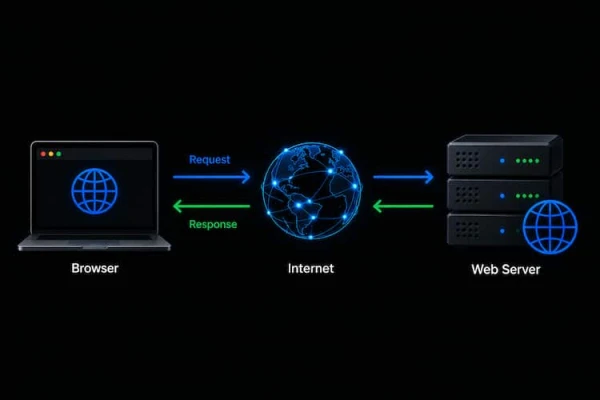
This information usually arrives through an HTTP request. Before your application's business logic can use that data, Laravel guides the request through a carefully designed lifecycle. It first matches the request to the appropriate route, applies any configured middleware, and finally passes the request to a controller where your application's logic begins to execute.
If you are unfamiliar with this process, you may want to explore How Laravel Handles HTTP Requests and Laravel Controllers Explained, as they provide a deeper understanding of how requests travel through the framework before validation occurs.
Because every request represents data coming from an external source, Laravel never assumes that the information is correct. Even when the user has no malicious intentions, typing mistakes, incomplete fields, and unexpected values are common. For this reason, validation acts as a checkpoint between incoming requests and the rest of your application, ensuring that only trustworthy data continues through the request lifecycle.
Understanding how Laravel handles user input is essential because validation is not an isolated feature. Instead, it works together with routing, middleware, controllers, authentication, and database operations to create a secure and predictable application.
Validation Is More Than Checking Empty Fields
One of the biggest misconceptions among new Laravel developers is that validation exists only to prevent users from leaving required fields blank. While checking for missing information is certainly one of its responsibilities, the framework's validation system is designed to solve a much broader problem.
Modern web applications constantly exchange information with users, external APIs, mobile applications, and third-party services. Every piece of incoming data has the potential to influence your application's behavior. If that information is inaccurate, incomplete, or malicious, the consequences can extend far beyond a single failed form submission.
For example, imagine an online store that accepts negative prices, duplicate email addresses, or incorrectly formatted dates. These mistakes may not immediately cause an error, but they gradually reduce the quality of your data and make your application increasingly difficult to maintain.
This is why validation should be viewed as a quality assurance system rather than a simple collection of rules. It verifies that every request satisfies your application's expectations before any business logic is executed or any information is stored in the database.
Validation also works closely with other Laravel features. After a user's identity has been verified, validation ensures that the submitted information itself is accurate and meets your application's requirements. Likewise, other security mechanisms help protect incoming requests from unauthorized access, while validation focuses on verifying the contents of those requests. Together, these components provide multiple layers of protection that help keep your application secure, reliable, and consistent over time.
Protecting Data Before It Reaches the Database
Protecting your application's database is one of the primary goals of validation. Once invalid data is stored, correcting it often requires additional effort, whether through manual cleanup, database migrations, or custom scripts. Preventing these problems is far easier than fixing them after they occur.
Think about a blog application where users can create articles. Without validation, someone could submit an empty title, an incorrectly formatted publication date, or content that exceeds the limits your application was designed to handle. Although the application might continue to function, the quality of the stored data would gradually decline, making future maintenance more difficult.
The same principle applies to eCommerce websites, customer management systems, SaaS platforms, and virtually every other Laravel application. Invalid prices, duplicate email addresses, incomplete profiles, or incorrectly formatted phone numbers may not immediately break the application, but they introduce inconsistencies that eventually affect reporting, business logic, and the overall user experience.
This is why validation should always be considered the first line of defense before database operations take place. Instead of allowing unreliable information to be stored and corrected later, Laravel encourages developers to verify every request first, ensuring that only clean, predictable, and trustworthy data reaches the database.
By protecting your data before it is stored, validation helps maintain the long-term health of your application. As your project grows and thousands—or even millions—of records are added, this early verification becomes one of the key factors that keeps your database organized, reliable, and easy to maintain.
When Should You Use Laravel Validation?
Validation should be applied whenever your application accepts data from an external source. It is not limited to registration forms or contact pages. Instead, it should be considered a standard part of handling every incoming request, regardless of where the data originates.
For example, validation plays an important role when users create accounts, sign in, update their profiles, submit contact forms, upload files, publish blog posts, or place orders in an online store. It is equally important for API endpoints, where requests often come from mobile applications, third-party services, or other systems outside your direct control.
A good rule to follow is simple: if data enters your Laravel application, it should be validated before it is processed or stored. By applying validation consistently throughout your project, you reduce unexpected errors, improve data quality, and make your application easier to maintain as it grows.
Best Practices for Laravel Validation
Writing validation rules is only part of building a reliable Laravel application. The way validation is implemented throughout your project can have a significant impact on maintainability, security, and the overall quality of your codebase. Following a few best practices helps ensure that validation remains consistent as your application grows.
First, validate every piece of data that enters your application. Even if information appears to come from a trusted source, such as an internal form or an authenticated user, it should never be assumed to be correct. Consistent validation reduces the risk of unexpected errors and helps maintain clean, reliable data.
It is also important to treat server-side validation as your primary layer of protection. While client-side validation improves the user experience by providing immediate feedback, it can be bypassed easily. Server-side validation should always perform the final verification before any business logic is executed or any data is stored.
As your application becomes larger, keeping validation organized becomes increasingly valuable. Laravel provides several ways to structure validation logic, making it easier to reuse rules, simplify controllers, and maintain consistency across different parts of the application. A well-organized validation strategy makes future development significantly easier.
Finally, remember that validation is not a replacement for other security features. It works together with authentication, authorization, middleware, CSRF protection, and database constraints. Each component has its own responsibility, and together they create a secure, reliable, and maintainable Laravel application.
Frequently Asked Questions
What happens if validation fails?
When validation fails, Laravel automatically stops processing the current request and returns validation errors to the user. This prevents invalid data from reaching your application's business logic or database.
Does validation improve application security?
Yes, but it should not be considered a complete security solution. Validation helps verify that incoming data matches your application's expectations, while other Laravel features such as authentication, authorization, middleware, and CSRF protection provide additional layers of security.
Is validation necessary for APIs?
Absolutely. API requests should be validated just as carefully as traditional web forms. Since APIs often receive data from external applications and third-party services, validation helps ensure that only correctly formatted and expected data is processed.
What is the difference between validation and authentication?
Authentication verifies who the user is, while validation verifies what data the user is submitting. These are separate responsibilities, but they work together to create secure and reliable Laravel applications.
Can client-side validation replace server-side validation?
No. Client-side validation improves the user experience by detecting simple mistakes before a request is submitted, but it should never replace server-side validation. The Validation system should always be responsible for making the final decision about whether incoming data is accepted.
Conclusion
Every successful Laravel application depends on trustworthy data. By making validation a fundamental part of your development process from the very beginning, you create applications that are easier to maintain, more secure, and better prepared to grow. In the end, Laravel Validation is not simply about rejecting invalid input—it is about building Laravel applications that developers and users can trust.
After validation succeeds, the data is typically stored using Laravel Eloquent models.
Related Articles
- Understanding Laravel Routing
Laravel Middleware not working
How Laravel Handles HTTP Requests
Laravel Controllers not working
Understanding Laravel Sessions
Laravel Route not workin - Laravel Relationships Explained: One-to-One, One-to-Many & Many-to-Many
- Understanding Laravel Service Providers: A Beginner Friendly Guide





















Discussion 0